Skip to content
FieldLux

USE CASE / IMMERSIVE ROOM

15 PROJECTORS
IN 500 SQUARE FEET.

Planned in FieldLux, checked with a light meter. Houston studio SIXTYFOUR used 15 Epson laser projectors to cover three walls and the floor of a room the size of a two-car garage. After the room opened, the numbers held.

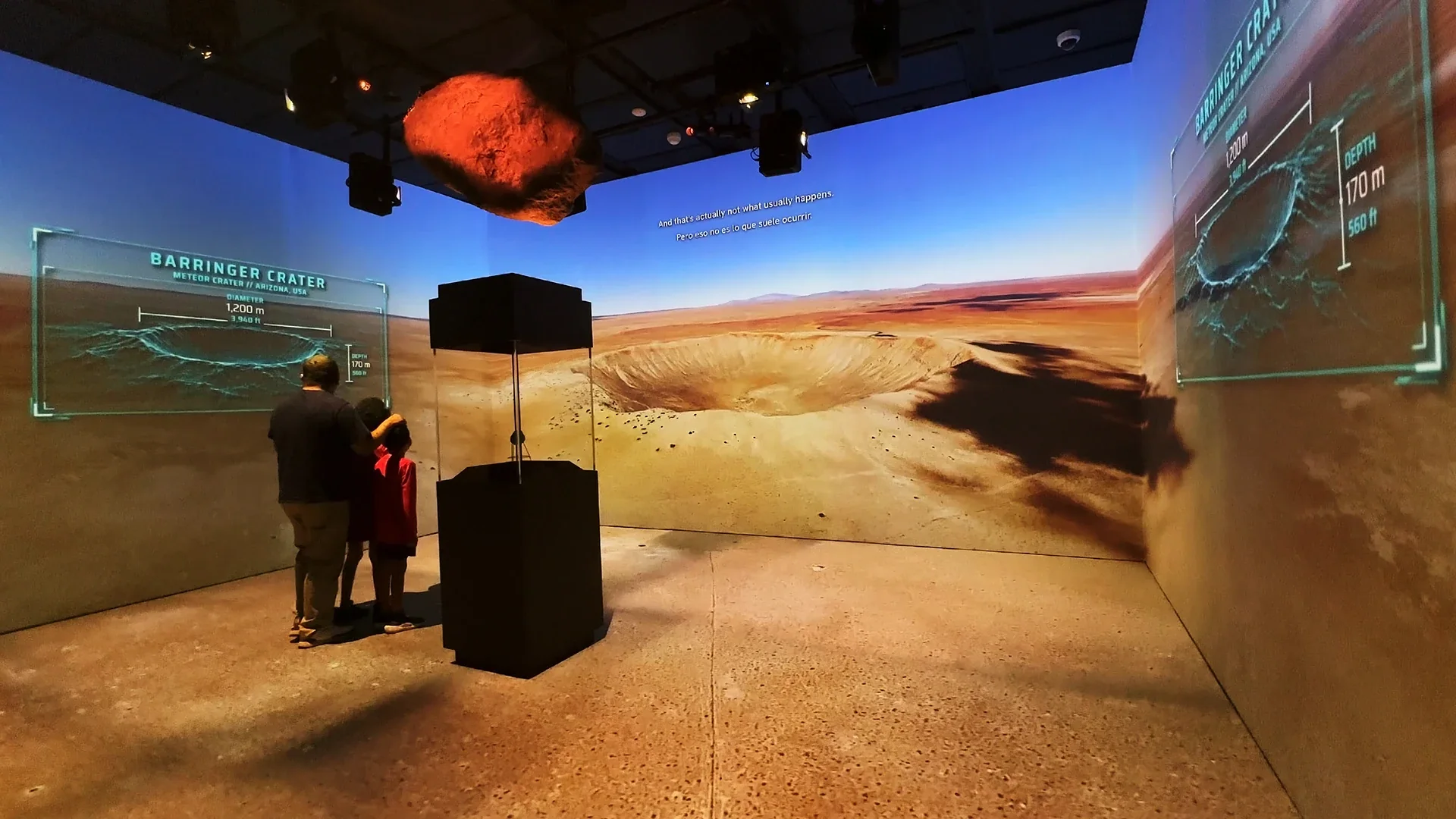
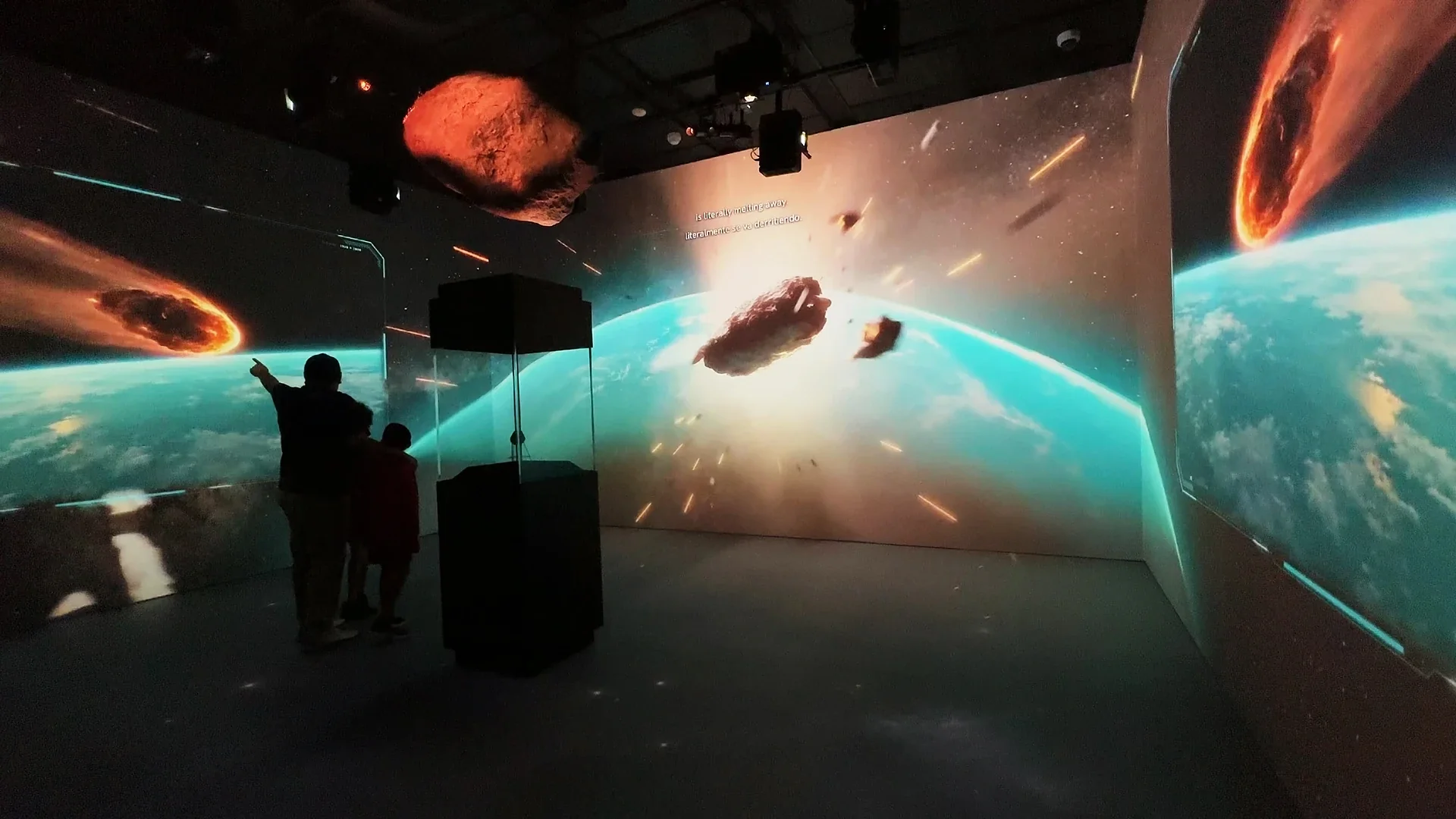
Visitors in the finished SIXTYFOUR room as an asteroid scene runs across three walls and the floor, with a display case in the middle
The finished room, with one show running across three walls and the floor.
Projectors
15
Epson laser projectors
Room
500sq ft
About the size of a two-car garage
Rated light output
90,000lm
All 15 projectors combined
Pixels
30M+
Across three walls and the floor
Blend groups
4
Planned in FieldLux
Wall paint LRV
11
Dark paint that reflects about 11% of the light

THE SHORT VERSION

PLANNED BEFORE INSTALL DAY.
CHECKED AFTER OPENING.

  1. 01 / BEFORE INSTALL

    The whole rig, in FieldLux

    SIXTYFOUR laid out all 15 projectors in four blend groups, across three walls and the floor.

  2. 02 / THE PLAN

    Every surface, mapped in advance

    Heatmaps showed where the light would land, how bright it would be, and how much pixel density each wall and the floor would get.

  3. 03 / AFTER OPENING

    Checked with a light meter

    Once the room was open, the SIXTYFOUR team went back with a light meter. The numbers held.

01 / THE ROOM

Fifteen projectors, where most theaters use two or three.

Most projection theaters put two or three projectors on one screen. This room, built by Houston studio SIXTYFOUR, uses 15 Epson EB-L695SE laser projectors to cover three walls and the floor of a space of about 500 square feet.

That is 90,000 lumens of rated output and more than 30 million pixels in a room the size of a two-car garage.
02 / THE WALLS

Dark walls, on purpose.

The walls are not white. They are painted dark, with a light reflectance value (LRV) of about 11, so they reflect only about 11% of the light that hits them.

When every wall is a screen, light from one wall bounces onto the others and washes them out. Dark paint stops that, so blacks stay black and colors stay strong.

The cost is that the paint absorbs most of the projector light too. That is why the room needs so many projectors, so close together.

LRV 11: about 11% of the light that reaches the wall is reflected back.

03 / THE PLAN

The whole rig, in FieldLux first.

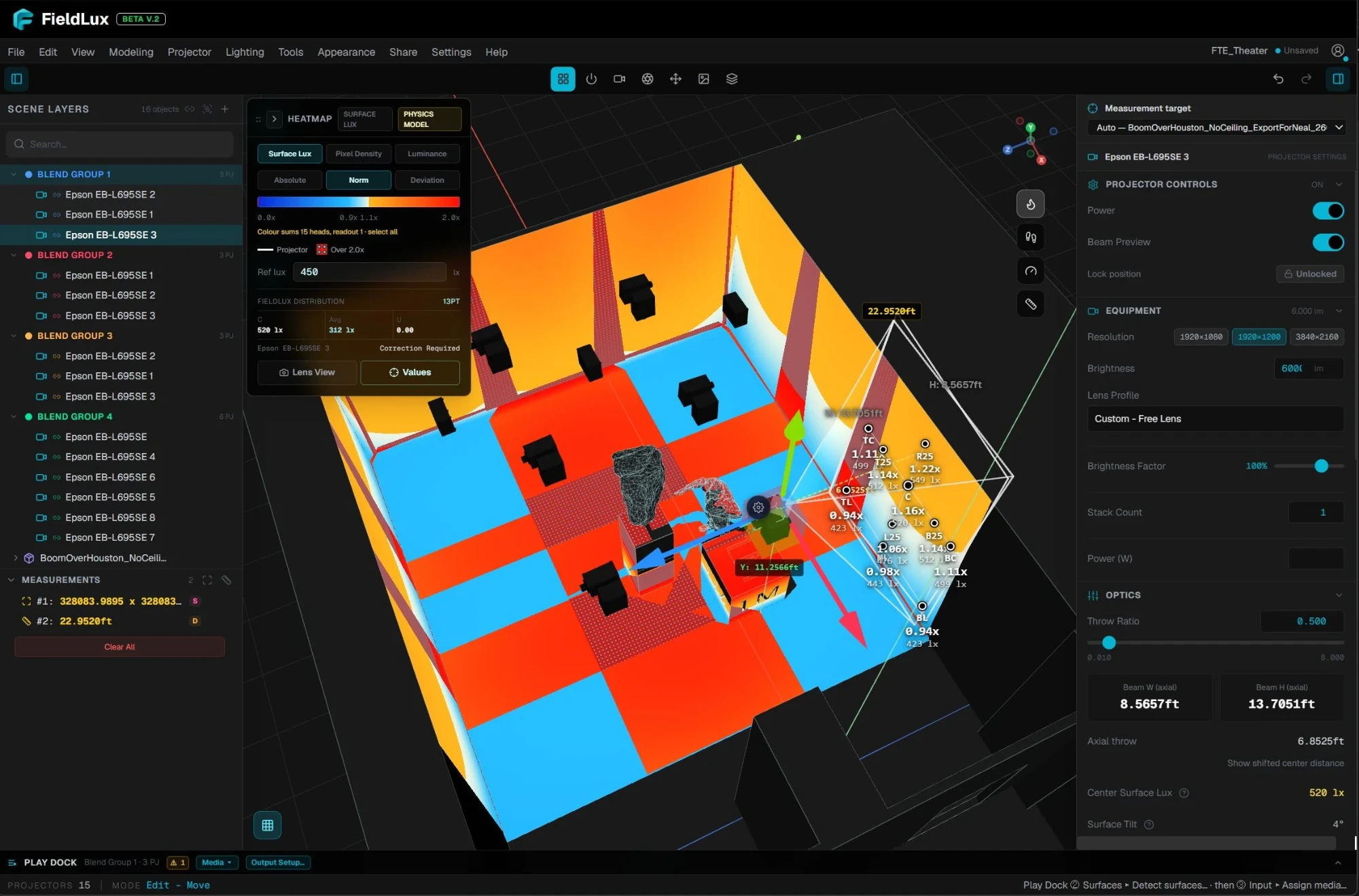
A room like this is hard to plan by hand. SIXTYFOUR laid out the whole rig in FieldLux first: all 15 projectors, in four blend groups.

The aim was to work out how much light would land on each surface and where the projectors would overlap, before install day.

The SIXTYFOUR room in FieldLux, seen from above: 15 projectors in four blend groups, with a heatmap on the walls and the floor. Opens the full-size screenshot.
In FieldLuxThe room in FieldLux: all 15 projectors in four blend groups, with a heatmap showing where the light lands. FieldLux values are planning estimates. Open full size

04 / THE HEATMAPS

Light, brightness and pixel density, surface by surface.

Heatmaps showed where the light would land, how bright it would be, and how much pixel density each wall and the floor would get.

In FieldLux, these are the three Heatmap maps: Surface Lux, Luminance and Pixel Density, shown right on the model.

How to read them: Chapters 09 to 11
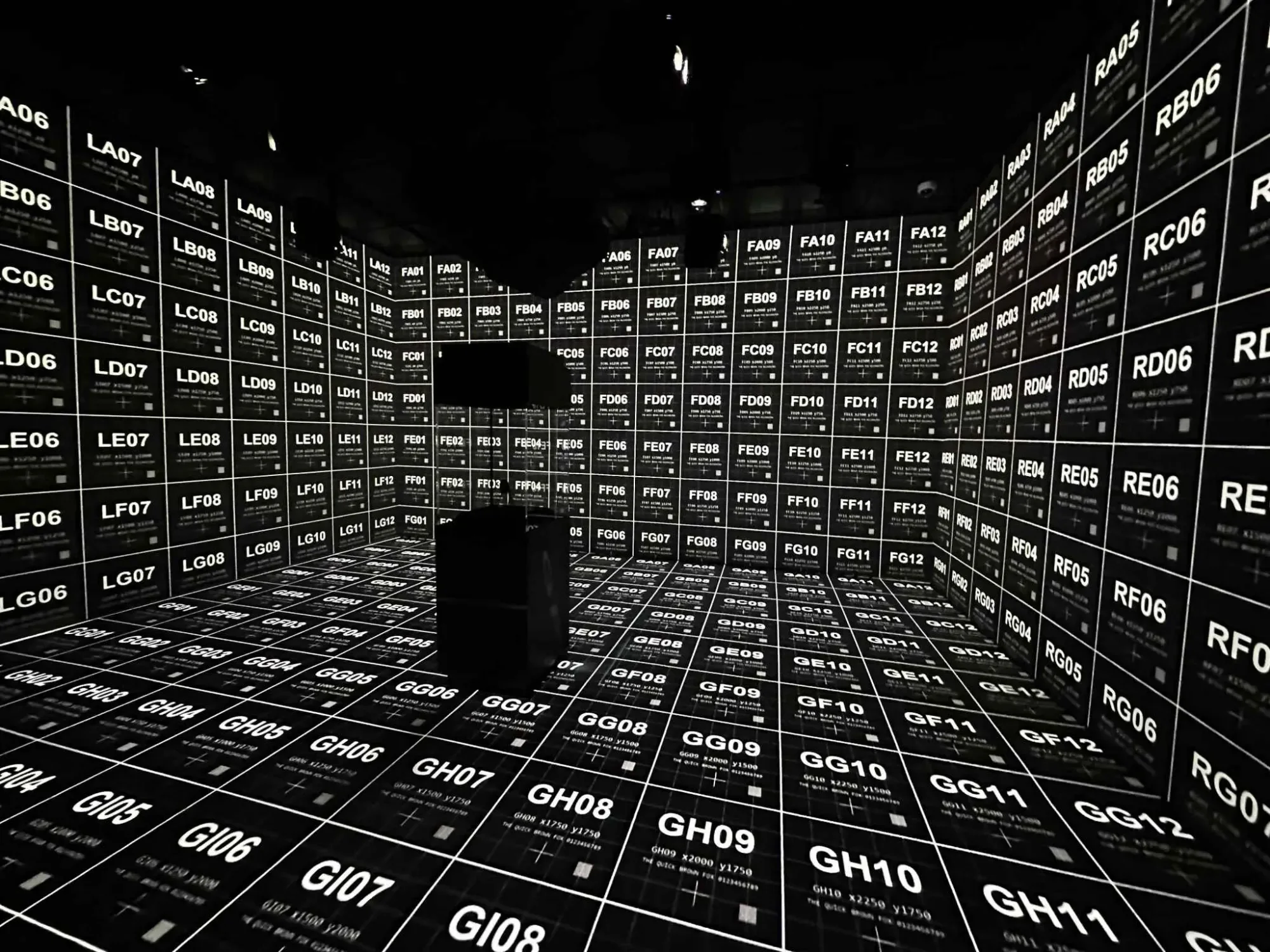
The finished room in the dark with a test pattern of labelled grid cells projected across three walls and the floor
In the roomA test pattern across the three walls and the floor of the finished room.

05 / THE CHECK

MEASURED AFTER OPENING.
THE NUMBERS HELD.

After the room opened, the SIXTYFOUR team went back and took readings with a light meter. The numbers held.

That is the job FieldLux is for: settle the big questions before install day, so time on site goes to fine-tuning.

Light meter on site
530lx
FieldLux estimate
530lx

One projector, measured 9 ft up the wall near the center of its image.

Visitors in the room as a desert crater scene runs across the walls and the floor
In the roomThe room running its show.

FieldLux values are optics-based planning estimates, not lux-meter readings. Check critical values on site with a meter, as SIXTYFOUR did.

IN FIELDLUX

THE TOOLS BEHIND THIS PLAN.

EDGE BLENDING

Blend groups

Group the projectors that overlap. FieldLux finds where the beams meet on each surface and sizes every blend edge in percent and meters.

Chapter 08

HEATMAP

Surface Lux, Luminance, Pixel Density

Turn on the Heatmap overlay for any of the three maps, and read Surface Lux on an Absolute, Norm or Deviation scale across every surface of the model.

Chapters 09 to 11

13PT DIAGNOSTIC

More than the center

Press Values for nine ANSI points and four quarter-points on the target, with center, average and uniformity for one projector or all of them.

Measurement

Your room

Plan the next room before install day.

FieldLux is free during open beta. No card required.